Planning permission and floral displays Redbridge Council guide
Posted on 10/10/2026
If you are trying to work out whether a floral display needs permission in Redbridge, you are not alone. It sounds simple at first - flowers are flowers, after all - but once a display moves outside a vase on a table and into shopfronts, forecourts, pavements, signage, or public-facing installations, the picture gets a bit more complicated. This Planning permission and floral displays Redbridge Council guide breaks it down in plain English, with the practical bits that people usually wish they had checked before starting.
Whether you are a shop owner, event organiser, property manager, florist, or just someone planning something lovely for a wedding, memorial, launch, or seasonal frontage, the same basic question comes up: what is allowed, what might need consent, and what should you check before you spend time and money? Let's make that easier.
Table of Contents
- Why this matters
- How the process works
- Benefits and practical advantages
- Who needs this guidance
- Step-by-step guidance
- Expert tips for better results
- Common mistakes to avoid
- Tools, resources and recommendations
- Law, compliance, standards and best practice
- Options and comparison table
- Real-world example
- Practical checklist
- Conclusion
- Frequently asked questions
Why Planning permission and floral displays Redbridge Council guide Matters
Floral displays can be decorative, welcoming, and good for business. They can also become a planning issue faster than people expect. In Redbridge, the key point is not simply whether a display looks attractive; it is whether the display changes how a site is used, affects the public highway, creates an obstruction, alters the appearance of a building, or sits within a location that has specific restrictions.
That is why a planning permission and floral displays Redbridge Council guide is useful. It helps you spot the line between a harmless arrangement and something that may need consent, permission, or at least a careful check before you proceed. Miss that line and you can end up with avoidable delays, complaints, or the slightly awkward experience of having to remove a display that looked perfectly fine to everyone in the room except the decision-maker.
There is also a broader reason this matters. A good display can support footfall, make a venue feel cared for, and improve the experience for visitors. But councils must balance that with safety, access, visibility, and consistency with local planning controls. To be fair, that balance makes sense. A row of planted tubs outside a cafe can look charming right up until it blocks a dropped kerb or pushes people into the road. Nobody wants that, especially not on a busy London street on a wet Tuesday evening.
Practical takeaway: if your display is purely temporary, low-risk, and fully contained on private land, you may not need formal permission. If it changes the exterior of a property, touches public space, or is likely to stay in place, assume you need to check first.
How Planning permission and floral displays Redbridge Council guide Works
The process usually starts with a simple classification question: what kind of floral display is it? A table arrangement for an indoor event is one thing. A mounted floral feature on the front of a building is another. A line of planters outside a shop is another again. The planning considerations change depending on whether the display is temporary, fixed, decorative, functional, or located in a sensitive area.
In practice, the council will look at a few core factors:
- Whether the display is on private land or public land
- Whether it affects the appearance of the building or site
- Whether it creates an obstruction for pedestrians, cyclists, wheelchair users, or vehicles
- Whether it involves fixing items to a wall, fence, canopy, or shopfront
- Whether the site is in a conservation area or another protected setting
- Whether the display is temporary, seasonal, or intended to remain long term
That last point matters more than people think. A display that is fine for a weekend event may be treated differently if it stays in place for months. A beautiful floral arch can be harmless at a wedding and then become a planning issue if it is repurposed as a permanent feature outside a commercial unit. Same flowers, different reality. Annoying? A little. But that's how these things work.
It also helps to remember that planning permission is not the only question. Even if formal planning consent is not required, you may still need to deal with landlord approval, highway permission, advertising consent, building safety considerations, or basic access rules. The tricky part is that one yes does not automatically mean all the other yeses are sorted.
For broader commercial and customer-facing floral needs, some readers also explore local florist services in Wanstead E11 or browse flower shops in Wanstead E11 when planning displays, events, or deliveries around the same area. Those pages are useful if your floral project needs fresh arrangements rather than compliance guidance alone.
Key Benefits and Practical Advantages
Getting the planning side right is not just about avoiding trouble. It can make the whole project smoother, more credible, and often cheaper in the long run.
- Less risk of enforcement issues: You reduce the chance of having to dismantle a display after it has already been installed.
- Better public safety: Good placement and clear access help avoid trip hazards and blocked routes.
- Cleaner design decisions: Once you know the rules, you can design with confidence instead of guessing.
- More professional presentation: A display that looks intentional and compliant tends to feel more polished.
- Improved budget control: Planning ahead avoids rework, emergency removals, or late changes.
There is a quieter benefit too: peace of mind. Truth be told, that is what most people want. You want to know the flowers will be beautiful on the day and that nobody will pull the plug at the last minute. When the planning piece is handled early, the creative side can breathe.
For seasonal or recurring displays, good planning also helps you build a repeatable process. A cafe that decorates every spring, for example, can save time next year by keeping notes on what was approved, what materials were used, and where issues cropped up. It sounds small. It isn't.
Who This Is For and When It Makes Sense
This guidance is relevant to a wide mix of people, not just big businesses. In fact, smaller operators often need it most because they tend to move quickly and work with leaner margins. One unexpected change can be expensive.
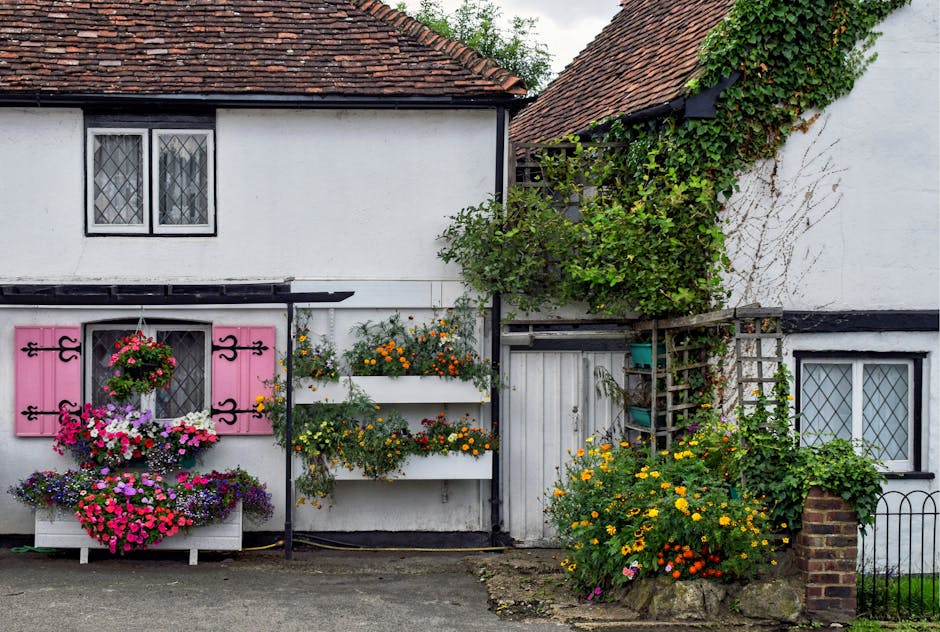
- Shop owners adding floral frontage, planters, or decorative features
- Cafes and restaurants using exterior displays to improve kerb appeal
- Event organisers planning weddings, launches, anniversaries, and public celebrations
- Property managers coordinating seasonal decorative schemes
- Florists installing site-specific arrangements or working on larger projects
- Community groups creating temporary public-facing displays
- Homeowners considering front-garden features that may affect frontage or boundary lines
It makes sense to look at permission early if any of the following apply:
- The display is fixed, mounted, or attached to the building
- The display sits near the pavement, road edge, or shared access route
- The display changes the look of the building in a noticeable way
- The site has heritage sensitivity, protected status, or a conservation setting
- The installation will last longer than a short event
One of the more common misunderstandings is thinking "temporary" automatically means "no issue." Not always. If a temporary display still affects highway safety or public access, it can still raise concerns. Temporary does help in many cases, but it is not a magic shield. Wouldn't that be nice, though?
Step-by-Step Guidance
If you want a sensible route through the process, this is the cleanest way to approach it.
1. Define the display properly
Start with the basics: what exactly is being installed, where, and for how long? Write down whether the display is freestanding, wall-mounted, in planters, hanging, or part of a wider event setup. A vague idea is where problems start. A clear description saves time later.
2. Check the location
Location changes everything. Private garden? Shop forecourt? Pavement? Common area? Venue entrance? Each has different implications. If the display touches the public realm, be extra careful. That is usually where permission questions become more likely.
3. Look at the physical impact
Ask yourself: does the display block sightlines, reduce access, create clutter, or interfere with movement? A display can be visually light and still physically awkward. Two large planters in the wrong spot can be more troublesome than a much bigger arrangement placed well.
4. Consider the duration
Short-lived seasonal displays are usually easier to manage than long-term fixtures. If something is staying up for weeks or months, treat it more like part of the site than a temporary decoration. That mental shift helps people make better decisions.
5. Check for extra approvals
Planning permission may not be the only control. You may also need building owner consent, lease approval, highway-related consent, or sign-off from an event venue. For businesses, corporate rules can matter too. A polished external display often depends on multiple green lights, not one.
6. Prepare a simple supporting pack
If you need to ask the council or another decision-maker, keep the pack simple but complete. Useful items often include:
- Photos of the site
- A sketch or plan showing placement
- Approximate dimensions
- Materials and fixing method
- How long the display will remain in place
- Any access or safety measures
7. Build in a review step
Before installation, review the proposal as if you were the person walking past it with a buggy, shopping bags, or limited mobility. That little perspective shift is often the difference between a display that merely looks good and one that works in the real world. And real world matters.
Expert Tips for Better Results
In our experience, the best floral displays are the ones that look effortless because the planning was anything but. A few simple habits make a big difference.
- Keep the base footprint modest. Oversized ground-level arrangements cause more trouble than most people expect.
- Use freestanding designs where possible. They are easier to adjust or remove if concerns arise.
- Choose materials with weather in mind. London rain, wind, and the odd gust off a corner can turn a tidy display into a mess by late afternoon.
- Think about sightlines. Keep low-profile items out of key views near entrances and crossings.
- Match the display to the site. A restrained design often works better than a loud one, especially on narrow pavements or busy streets.
- Document the installation. A few dated photos can be useful if questions come up later.
There is also a design point that gets overlooked: the more integrated the floral display looks, the less likely it is to feel like an afterthought or cause concern. If the feature belongs to the building rather than sitting on top of it, people usually respond better. Not always. But usually.
For ongoing flower care, the site owner or florist may also want to think about post-installation upkeep. A display that looks immaculate on day one can quickly slide if nobody waters, trims, or replaces tired blooms. If you are planning a larger setup, pairing the display with guidance from flower care advice can help keep it looking presentable for longer.
Common Mistakes to Avoid
The same handful of issues tends to crop up again and again. Most are easy to avoid once you know what to look for.
- Assuming all floral displays are exempt. They are not. Placement and permanence matter.
- Ignoring the public highway. A display that crosses into shared space can trigger extra concerns immediately.
- Forgetting landlord or lease rules. Planning and property rights are separate questions.
- Not checking conservation sensitivity. Heritage areas can be stricter than surrounding streets.
- Using fixed fixtures without thought. Drilling, anchoring, or bolting items in place may change the permission picture.
- Designing for looks only. Good displays are attractive and practical. Both, not one or the other.
- Leaving checks too late. This is the big one. Last-minute questions tend to cause rushed decisions.
A classic mistake is ordering the flowers first and sorting the paperwork later. It's a bit like buying shoes before checking your size. Sometimes you get lucky. Sometimes you don't. The safer route is less exciting, but it works.
Tools, Resources and Recommendations
You do not need a huge toolkit to plan a floral display properly. A small, practical set of resources is usually enough.
- Site photos: take wide shots and close-ups from the angle people will actually see
- Simple measuring tape: useful for width, depth, and clearance checks
- Basic sketch plan: even a neat hand-drawn plan can be enough for early checks
- Weather-aware materials: weights, waterproof containers, and suitable fixings
- Care notes: watering schedule, refresh dates, and contact details for the installer
For product selection, some projects benefit from browsing grouped floral collections instead of choosing piece by piece. That is especially true if the display needs a consistent style or colour palette. For example, a soft white scheme might be easier to integrate into a formal frontage than a mixed arrangement. If you are exploring practical options, pages such as white flowers, mixed colours, or florist choice arrangements can help you think through presentation before you finalise the layout.
For event-led projects, broader categories can be useful too. A wedding display, for instance, may draw on wedding flowers, while a memorial or tribute display may be better served by tributes or wreaths. Different settings, different expectations. That part is easy to miss if you are focused only on the visual concept.
Law, Compliance, Standards, or Best Practice
It is worth being careful here. Planning controls can be affected by the nature of the site, the type of installation, local policy, lease conditions, and wider legal duties. Rather than guessing, treat the following as the safest practical approach.
- Check whether the display is development in planning terms. Fixed or lasting features are more likely to raise questions than moveable decorations.
- Do not obstruct access routes. This includes footways, entrances, dropped kerbs, and routes needed by disabled users.
- Be cautious around highways and public land. Anything that occupies shared space deserves extra attention.
- Respect building and landlord conditions. Leasehold premises often have rules that sit alongside planning control.
- Think about health and safety. Stable placement, trip prevention, and weather resilience are basic expectations, not optional extras.
Best practice is to keep records of what was agreed, when it was installed, and who is responsible for maintenance. That is not bureaucracy for its own sake. It saves arguments later, especially when a display has been praised by everyone on day one and then quietly forgotten by week three.
If you are dealing with a sensitive site, or you simply are not sure, take the conservative route. Small adjustments are usually easier than retrospective fixes. And retrospective fixes, frankly, are rarely fun.
Options, Methods, or Comparison Table
Different floral display approaches suit different settings. The table below is a practical comparison rather than a strict rulebook, but it is a useful way to think about your options.
| Display type | Typical use | Planning risk level | Why it matters |
|---|---|---|---|
| Indoor table arrangement | Weddings, receptions, meetings | Low | Usually inside private space with limited planning concern |
| Freestanding planters | Shopfronts, cafes, seasonal frontage | Medium | Can affect access, appearance, and public space |
| Mounted floral feature | Building facade, arch, sign surround | Medium to high | May count as a fixed alteration or visual change |
| Temporary event installation | Launches, celebrations, short events | Variable | Usually easier if time-limited and fully contained |
| Public-facing seasonal display | Street-facing decorative schemes | Medium to high | May involve highway, safety, or local consent issues |
The safest option is not always the simplest one, but it is often the most sustainable. A free-standing arrangement that can be moved by hand may be easier to manage than a permanently fixed feature that looks fantastic but boxes you into a corner later. That trade-off is worth thinking through before installation day.
Case Study or Real-World Example
Here is a realistic scenario. A small cafe in Redbridge wants to brighten its frontage with two large floral planters, a low decorative garland around the entrance, and a seasonal change for summer. The owner wants the place to feel inviting from the pavement, and on paper the idea sounds simple enough.
But once the layout is checked properly, a few issues appear. One planter would narrow the pavement at peak times. The garland would need light fixing to the frontage. The cafe also rents the premises, so the landlord must be asked before anything is attached. Nothing dramatic. Just a bit of coordination, which is often what these jobs really are.
The solution in this case is to switch to narrower planters, keep the display entirely within the property line, make the garland freestanding where possible, and document the arrangement before installation. The end result still looks warm and welcoming, and the owner avoids a potentially awkward compliance conversation later. That is usually how good outcomes happen: not by doing less, but by doing the planning properly.
By late afternoon, with the light fading and people drifting past on the way home, the entrance feels calm and cared for. No fuss. No obstruction. Just a display that does the job.
Practical Checklist
Use this quick checklist before you commit to a display:
- Have you defined the display type clearly?
- Is the display on private land, or does it affect public space?
- Will it be temporary or long term?
- Could it block access, movement, or sightlines?
- Does it involve fixing items to a building or structure?
- Is the site in a conservation area or otherwise sensitive setting?
- Do you need landlord, leaseholder, or venue approval?
- Have you measured the space properly?
- Are the materials suitable for weather and maintenance?
- Have you kept a simple record of what was agreed?
If you can tick most of those off, you are already ahead of the game. If not, pause and sort the gaps first. It really is that straightforward.
Get a free quote today and see how much you can save.
Conclusion
Planning permission and floral displays in Redbridge is less about shutting down creativity and more about making sure good ideas can actually happen. The right display should feel natural, safe, and well placed - not rushed, awkward, or vulnerable to complaints. If you plan early, check the site properly, and keep an eye on access and duration, you will avoid most of the common headaches.
That is the real value of this Planning permission and floral displays Redbridge Council guide: it helps you move from "I hope this is okay" to "we have checked, and this will work." Small shift. Big difference.
And once the flowers are in place, the light catches the petals, and the frontage looks calm and finished, you will probably be glad you took the slower route. Usually, that extra bit of care is what makes the whole thing feel right.
Frequently Asked Questions
Do floral displays always need planning permission in Redbridge?
No. Many floral displays do not need formal planning permission, especially if they are temporary, inside private premises, or fully contained. The issue usually comes up when the display is fixed, long term, attached to a building, or affecting public space.
What kind of floral display is most likely to cause planning issues?
Freestanding planters or decorative features near pavements, mounted displays on building fronts, and anything that changes the appearance of a property are more likely to need checking. Public-facing features deserve extra caution.
Does a temporary floral installation still need approval?
Sometimes, yes. Temporary does not automatically mean exempt. If the installation affects access, safety, or the highway, it may still need review even if it is only in place for a short time.
Can I put flowers outside my shop without asking anyone?
Not always. If the display sits entirely within your premises and does not interfere with access, you may be fine. If it crosses into shared space, sits near the kerb, or is attached to the building, you should check first.
What about hanging baskets or wall-mounted flower features?
These often need extra thought because they can affect the external appearance of the building and may involve fixings. They can be fine in the right setting, but they should not be treated as automatically harmless.
Do I need landlord permission as well as planning permission?
Yes, if you are renting or leasing the premises. Landlord approval is separate from planning permission, and both may be relevant. One does not replace the other.
How do I know if my site is sensitive or restricted?
If the property is in a conservation area, near a listed building, or in a location with a distinctive streetscape, treat it as sensitive until checked. When in doubt, assume the rules may be tighter than they first appear.
Can floral displays block the pavement if they look attractive?
No, not safely. Attractive displays still need to leave enough room for pedestrians, wheelchair users, buggies, and general movement. Beauty does not override access.
What information should I prepare before making enquiries?
Have photos, rough measurements, a simple sketch, the proposed duration, and details of how the display will be installed and maintained. That usually gives decision-makers enough to give you a useful steer.
Is a floral display treated the same as a sign or advertising feature?
Not always, but there can be overlap if flowers are integrated into branded frontage, canopies, or signage structures. The more the display becomes part of the commercial face of the building, the more carefully it should be reviewed.
What is the safest approach if I am unsure?
Keep the design simple, avoid fixing it permanently until you are clear on approvals, and check any site-specific restrictions first. A modest change made early is far easier than a large one that has to be undone later.
Can a florist help with the compliance side?
Yes, a good florist can help with practical layout, installation methods, and what tends to work in real settings. They are not a substitute for legal or council advice, but they often spot practical issues before they become expensive problems.